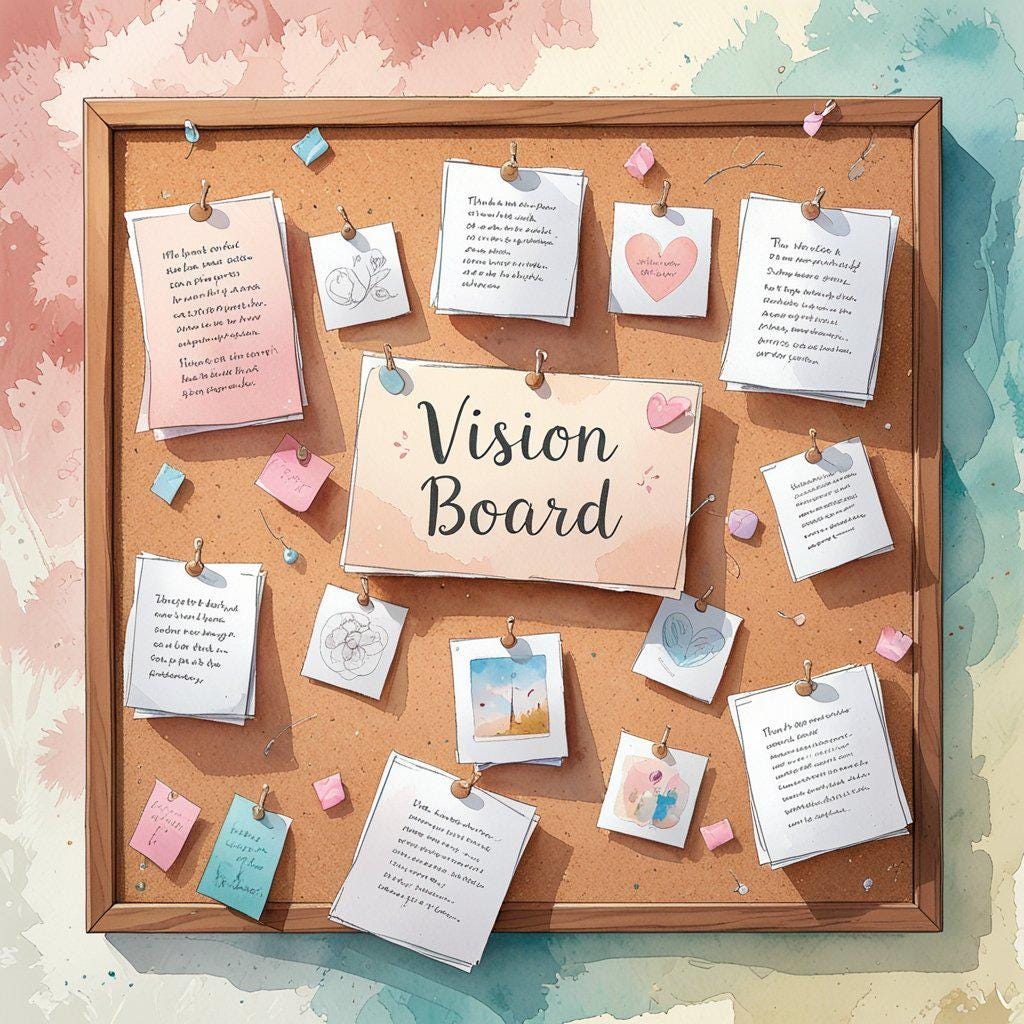
A vision board is a collection of images and words that shows what you want to achieve in the coming year.
It's a simple way to keep your goals visible and stay motivated throughout the year. Creating a vision board turns your dreams into something you can see every day. This helps you stay focused on what matters most to you.
Whether you want to improve your health, advance your career, or build better relationships, a vision board puts your plans right in front of you. You can make it on paper, poster board, or even on your computer.
This guide will walk you through the entire process. You'll learn what materials you need, how to pick the right images, and how to set up your board so it actually helps you reach your goals.
Getting Started with Your Vision Board
Building a vision board starts with knowing what you want and picking the right materials to bring those ideas to life. You need a clear plan before you start cutting out pictures or printing quotes.
Clarifying Your Goals for the New Year
Think about what you actually want to change or achieve this year. Write down your goals in specific categories like career, health, relationships, money, and personal growth.
Instead of saying "get healthy," break it down into something real like "go to the gym three times a week" or "cook dinner at home five nights a week." Vague goals don't work on vision boards because you can't find images that match them.
Pick 3-5 main goals to focus on. Too many goals will make your board cluttered and confusing. You want to look at your board and instantly know what you're working toward. Ask yourself what your life will look like when you reach these goals. What will you be doing? Where will you be? Who will be around you? These details help you find the right visuals later.
Choosing Your Board Materials
A poster board from any craft store works great for beginners. You can also use a corkboard, foam board, or even a large picture frame with backing.
Digital vision boards are another option if you prefer keeping everything on your phone or computer. Apps like Canva or Pinterest make it easy to collect and arrange images without physical materials.
Physical Board Supplies:
- Poster board or foam core (20x30 inches is a good size)
- Glue stick or tape
- Scissors
- Magazines or printed images
- Markers or letter stickers
Pick a board size that fits where you'll keep it. You need to see it every day, so choose a spot before you buy materials.
Gathering Images and Words That Inspire You
Flip through magazines and tear out anything that makes you feel excited about your goals. Don't overthink it at first—just grab what catches your eye. Search online for specific images if you can't find what you need in magazines. Print them out in good quality so they look clear on your board. Look for pictures that show the exact life you want, not generic stock photos that don't mean anything to you.
Save motivational quotes, single words, or phrases that match your goals. Words like "strong," "focused," or "abundant" add meaning to your images. You can print these or cut them from magazines too. Collect more than you think you'll need. You can always cut things out during the final design process.
Making Your Vision Board Work
A vision board helps you reach your goals if you design it thoughtfully and keep it visible in your daily life. The way you arrange your images, where you place your board, and how often you update it all affect how well it works for you.
Arranging and Creating Your Layout
Start by grouping similar goals together on your board. Put career goals in one area, health goals in another, and relationships in a third section. This helps your brain process each category separately when you look at it.
Place your most important goal in the center of your board where your eyes naturally land first. Make this image larger than the others so it stands out. Your brain will focus on what's biggest and most central. Leave some white space between images instead of cramming everything together. Too much clutter makes it hard to focus on individual goals.
Think of it like a photo album—you want each picture to breathe. Use different sizes and angles to create visual interest. Mix vertical and horizontal images. Add a few words or phrases in bold letters next to key images to reinforce what they represent.
Placing Your Board for Daily Motivation
Put your vision board somewhere you'll see it every morning. The best spots are next to your bed, on your bathroom mirror, or above your desk. Seeing it first thing sets your intentions for the day.
Your bedroom works well because you see it when you wake up and before you sleep. These are the times when your mind is most open to new ideas. Some people hang their board on the inside of their closet door so they see it while getting dressed.
If you work from home, place it near your computer screen. You'll glance at it throughout the day during breaks. You can also take a photo of your board and set it as your phone wallpaper or lock screen. With a clear vision board, you can stay motivated and focused as you work toward your goals all year long.
Updating Your Vision Board Throughout the Year
Review your board every month to see which goals you've completed. Remove images for goals you've achieved and add new ones. This keeps your board current and relevant.
Some goals will stop mattering to you as the year goes on. That's normal. Replace those images with new goals that excite you now. Your priorities shift, and your board should too. Add dates or progress markers to track your journey. Write the month you achieved something directly on the board.
You can also stick a small note next to completed goals. This helps you see your progress and motivates you to keep going. Regular updates keep your vision board meaningful all year long.